
HVAC repair · Washington County, UT
HVAC Repair St. George, UT: AC, Furnace and Heat Pump Service You Can Trust
When your AC quits during a St. George July, you don’t need a sales pitch. You need someone who can tell you what failed and when they can be at your door. HVAC Repair St George does HVAC repair in St. George for air conditioners, furnaces, heat pumps and ductless mini-splits for homes and small businesses in St. George, Washington, Hurricane, Ivins, Santa Clara and La Verkin.
Call (435) 210-9732 to talk to a person. You get the arrival window on the phone, before a truck rolls.
Before you call us, know this
- We explain what failed before any repair starts
Local conditions
Why HVAC Repair St. George Is Different From the Rest of Utah
A system in Salt Lake City and a system in St. George are built the same and live very different lives. Here is what the local climate does to yours:
Long, brutal cooling seasons
St. George averaged a record 107.9°F daytime high in July 2024, and highs hit 100°F every day from June 21 through at least August 6 that year, a 46-day streak, according to KUER. Your compressor runs for months with almost no rest.
Red dust
Fine sand from the Red Hills and Snow Canyon area packs into outdoor condenser coils and filters, which cuts airflow and makes the system run hotter.
Hot attics
Ductwork in an attic sits in air far hotter than the outdoor temperature. Leaky or poorly insulated ducts lose cooling before it reaches the room.
Monsoon humidity
Late-summer storms raise indoor humidity, so an undersized or tired system struggles to keep up when the air is also damp.
Freezing winter nights
Some winter nights drop to freezing. Furnaces and heat pumps sit idle for most of the year, then have to start reliably in January.
Aging homes
The median home in the St. George area was built around 1999, according to This Old House. Original systems from that era are often at or past the typical 10 to 15 year life.
Hard water
Mineral scale builds up in humidifiers and any water-fed equipment.
That is why we treat the first AC tune-up before summer and a furnace check before the first cold snap as the cheapest repairs you will ever buy.
Our process
How We Handle HVAC Repair St. George
Every repair call follows the same steps, so nothing surprises you:
1
You call, and we tell you two things
The arrival window and what to check while you wait.
2
We diagnose with instruments, not guesses
We measure pressures, temperatures, amp draw and airflow before naming a cause.
3
We show you the failed part or the reading
If a capacitor is weak, you see the meter reading. If a coil is leaking, you see where.
4
We fix it and test it under load
The system has to cool the house, not just turn on.
5
You get a note on anything else we saw
We separate “needs fixing now” from “worth watching.”
Repairs we handle
What’s Wrong With Your System? Common Repairs We Handle
AC Repair in St. George: Not Cooling, Blowing Warm Air or Freezing Up
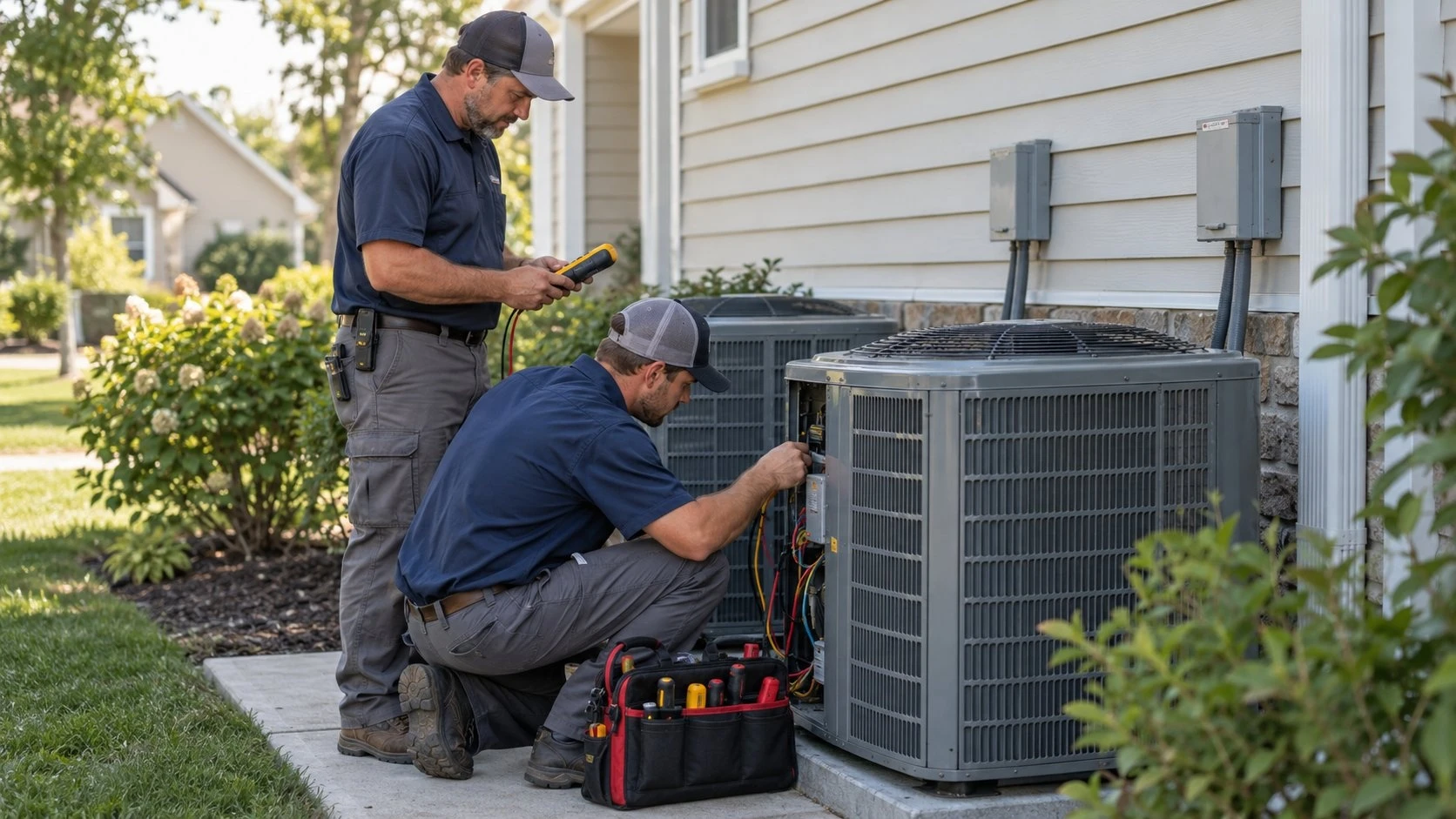
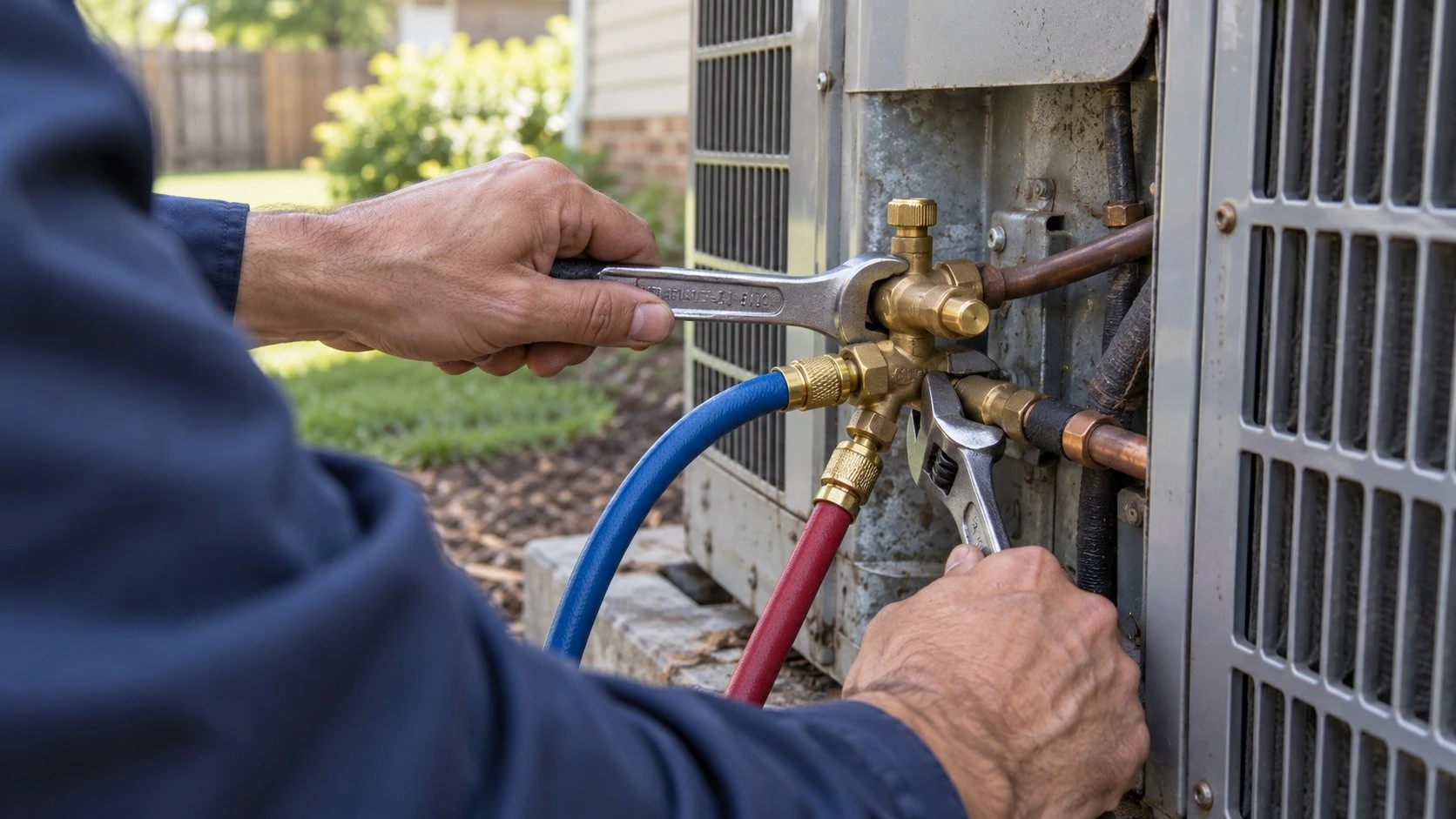
An AC that runs but doesn’t cool usually has one of five problems: a dirty filter or coil, low refrigerant from a leak, a failed capacitor or fan motor, a blocked condensate drain or a weak compressor.
What you can safely check first:
- Replace a clogged filter. In our dust, check it monthly during cooling season.
- Make sure the thermostat is on Cool and set below the room temperature.
- Look at the outdoor unit. If the fan isn’t spinning or the coil is covered in dust, switch the power off at the disconnect before touching anything.
- If the indoor coil or the refrigerant line looks iced over, turn the system to Off and run only the fan so the ice melts. Running it frozen can damage the compressor.
What needs a qualified technician: anything involving refrigerant, electrical components or the sealed system. Refrigerant is not “used up.” If the charge is low, there is a leak, and topping it off without finding the leak is a short-term patch.
Other Repairs
- Capacitors and contactors. Small parts that fail often in extreme heat. They store a charge, so this is not a do-it-yourself fix.
- Blower and ECM motors. Weak airflow, noise or a system that cuts out.
- Thermostats. Blank screens, wrong readings or a system that won’t respond.
- Ducts. Rooms that are 5 to 10 degrees off from the rest of the house usually point to airflow or duct problems, not the equipment.
Furnace Repair in St. George: No Heat, Short Cycling or Strange Smells
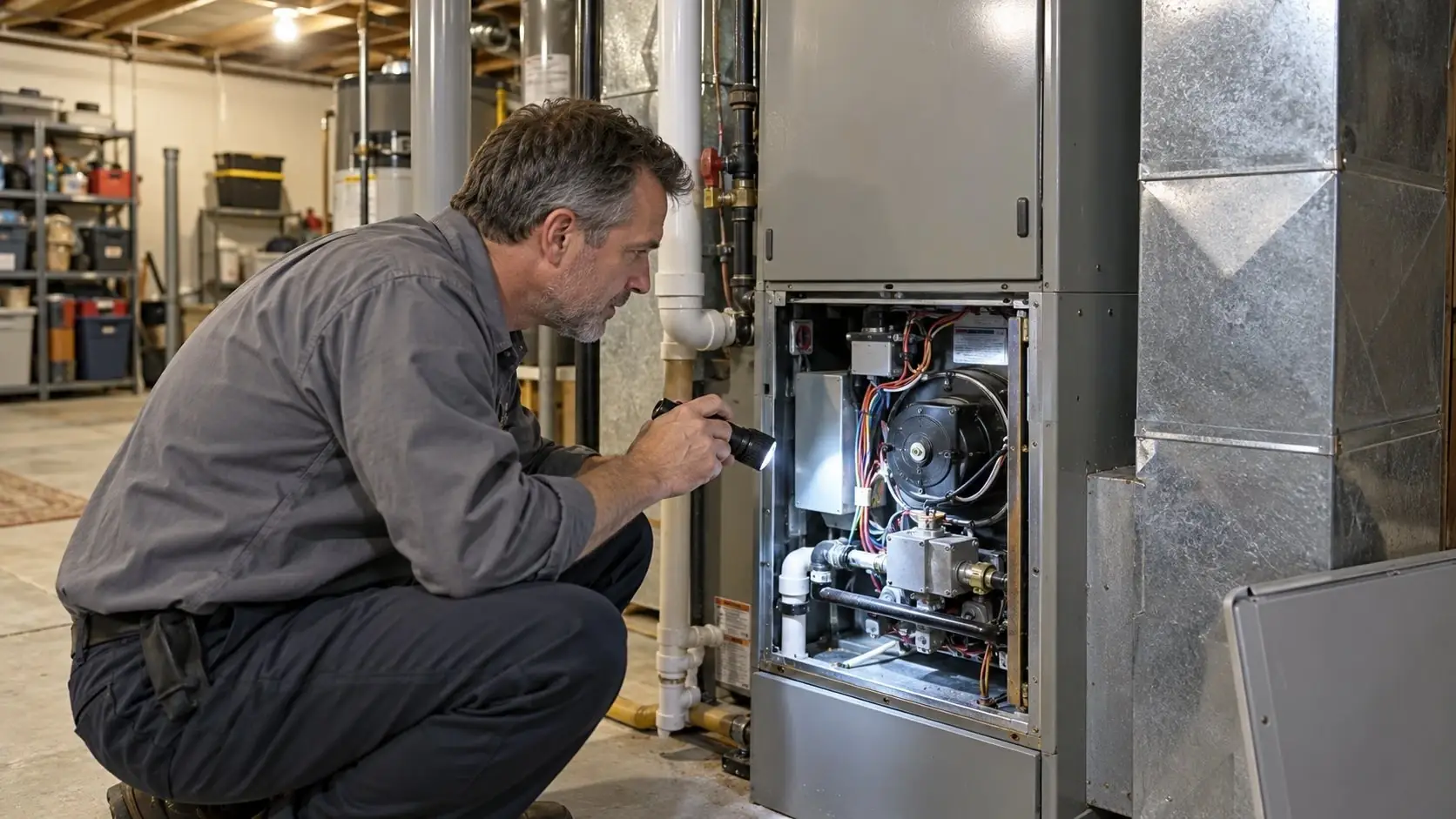
Most furnace no-heat calls come from a dirty flame sensor, a failed igniter, a clogged filter or a tripped limit switch. Check that the thermostat is on Heat, the filter is clean and the furnace switch is on. Don’t reset the breaker over and over.
If a carbon monoxide alarm sounds, get everyone outside and call 911 or your gas utility. Don’t try to find the cause yourself.
Heat Pump Repair: Stuck in the Wrong Mode, Ice on the Outdoor Unit
Heat pumps do both jobs, which means the reversing valve, defrost controls and refrigerant circuit all matter. Common calls include a unit that heats when it should cool, ice that doesn’t clear on the outdoor coil and short run cycles. These need a technician with the right gauges.
Ductless Mini-Split Repair
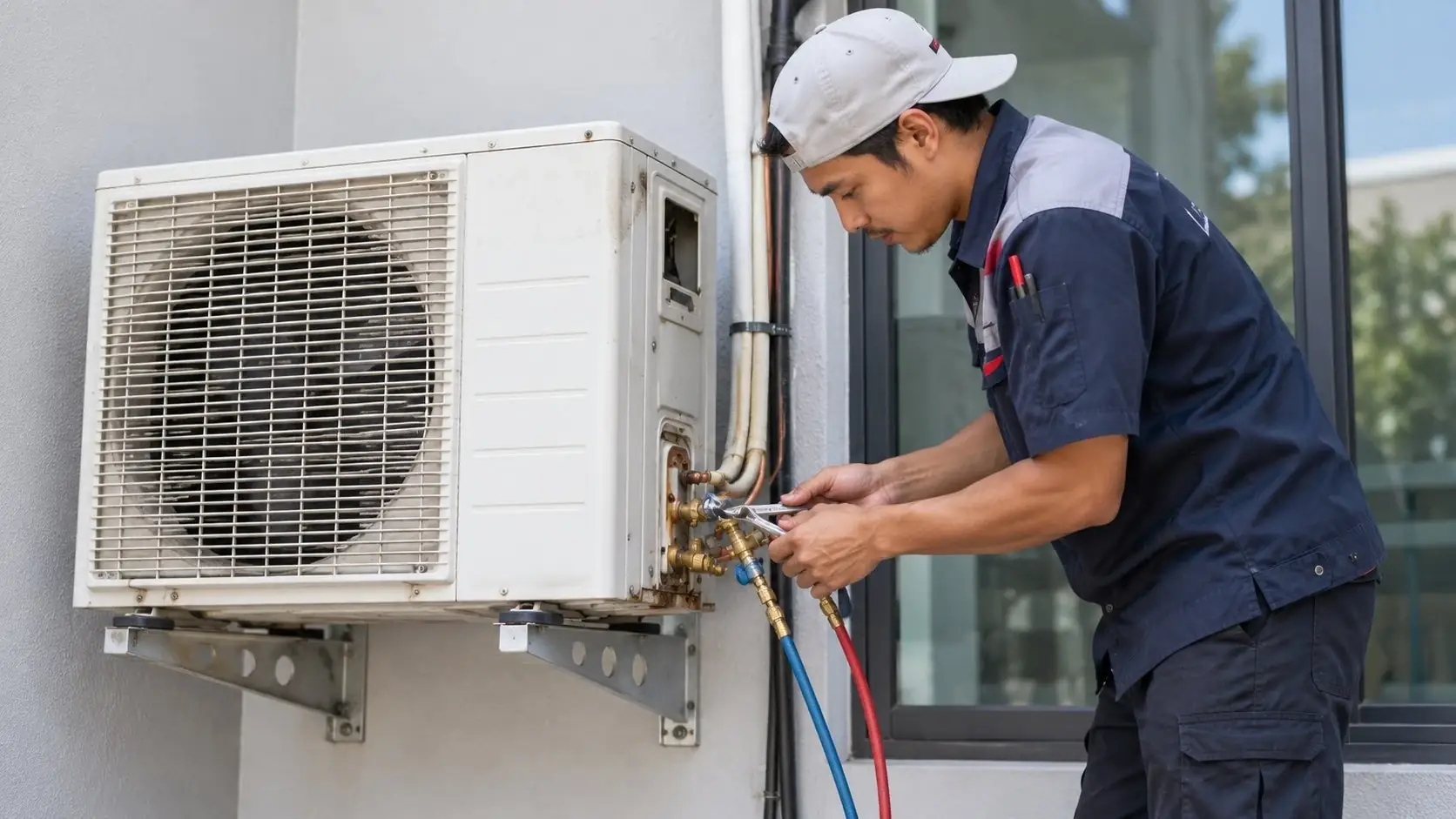
Mini-splits are popular for additions, garages and casitas. Common faults include blinking error codes, a clogged indoor drain, a dirty blower wheel and communication errors between the indoor and outdoor units. We service the systems we install and many we don’t.
Learn more: ductless mini-split repair →
Repair or replace
Repair or Replace? How to Decide
Most St. George HVAC repair decisions come down to one question: is the system worth fixing? Replacement makes sense when repair costs start to stack up against the value left in the system. Use these checks together, not alone:
The $5,000 rule
Multiply the system’s age by the repair cost. If the number is above $5,000, replacement is worth pricing. A 12-year-old system with a $500 repair scores $6,000.
The 50% rule
If the repair costs half or more of a new system, replace.
Age
Cooling systems commonly last 10 to 15 years. Constant desert use tends to land closer to the short end.
Refrigerant
R-22 systems are expensive to keep running because R-22 production ended in 2020. New residential systems are now being built for R-454B or R-32, which are mildly flammable (A2L) refrigerants, so your technician needs the right procedures and tools. R-410A systems can still be repaired.
Repeat failures
A third service call in two summers is a pattern.
On incentives: the federal 25C home improvement credit ended on December 31, 2025, so equipment installed in 2026 doesn’t qualify for it (Honkamp summary of the One Big Beautiful Bill Act). Check with your utility and a tax professional about any current programs.
If it were our house, we would tell you plainly whether repair or replacement makes more sense. See AC replacement options →
Same-day and emergency
Same-Day and Emergency HVAC Repair St. George
Call and we tell you what we can do for your situation. No “usually” and no “most calls”: you get a straight answer on timing when you call.
While you wait for a no-AC call
- Close blinds on west and south windows and run ceiling fans.
- Move children, older adults and pets to the coolest room, or to a cooler building if the house is above about 90°F.
- Drink water. Heat stroke is a medical emergency: confusion, a very high body temperature, hot dry skin or fainting means call 911.
- Don’t keep flipping the breaker. If it trips twice, leave it off and tell us.
HVAC Repair St. George Safety: Stop Using the System If You See These
- A burning smell, smoke or sparks
- Ice on the indoor coil or refrigerant line
- Water pooling around the unit
- A breaker that trips twice
- A carbon monoxide alarm, which means leave the home and call 911
Switch the system off at the thermostat and the breaker, then call.
Safety First: Carbon Monoxide and Gas Smells
If a carbon monoxide alarm sounds, get everyone outside and call 911. If you smell gas, leave the house and call 911 or your gas utility from outside. Don’t flip switches or look for the source. A furnace with a cracked heat exchanger can release carbon monoxide, so we inspect it on every heating visit.
Service area
Service Area: Where We Work
We cover HVAC repair in St. George and the nearby communities below:
| City | ZIP codes | Neighborhoods and areas we get calls from |
|---|---|---|
| St. George | 84770, 84790 | Bloomington, Sun River, Green Valley, Southgate, Little Valley, The Ledges, Dixie Downs |
| Washington | 84780 | Washington Fields, Green Spring, downtown Washington |
| Hurricane | 84737 | Hurricane Valley, Sand Hollow area |
| Ivins | 84738 | Kayenta, Ivins Reservoir area |
| Santa Clara | 84765 | All of Santa Clara |
| La Verkin | 84745 | Town center and surrounding lots |
ZIP codes from ZIP Data and Maps.
If you are near Snow Canyon State Park, the Red Hills, Sand Hollow or Tuacahn, tell us when you call. Older homes and hillside lots often have long duct runs or tight equipment access, and that changes how we plan the visit.
Refrigerant work is regulated: the EPA’s Section 608 program sets the rules for technicians who handle it.
Hiring checklist
How to Hire a Company for HVAC Repair St. George Without Getting Burned
Homeowners in local groups ask for the same thing again and again: someone honest. Use this checklist with any company, including us:
1
Ask what failed and why.
A good technician names the part and can show you.
2
Question urgency tactics.
A system that is truly dangerous gets shut off, not sold.
3
Be careful with “this one repair fixes everything.”
Ask what else could cause the same symptom.
Maintenance
HVAC Repair St. George and Maintenance That Fits the Desert
A little attention at the right time of year catches the cheap problems before they become summer emergencies.
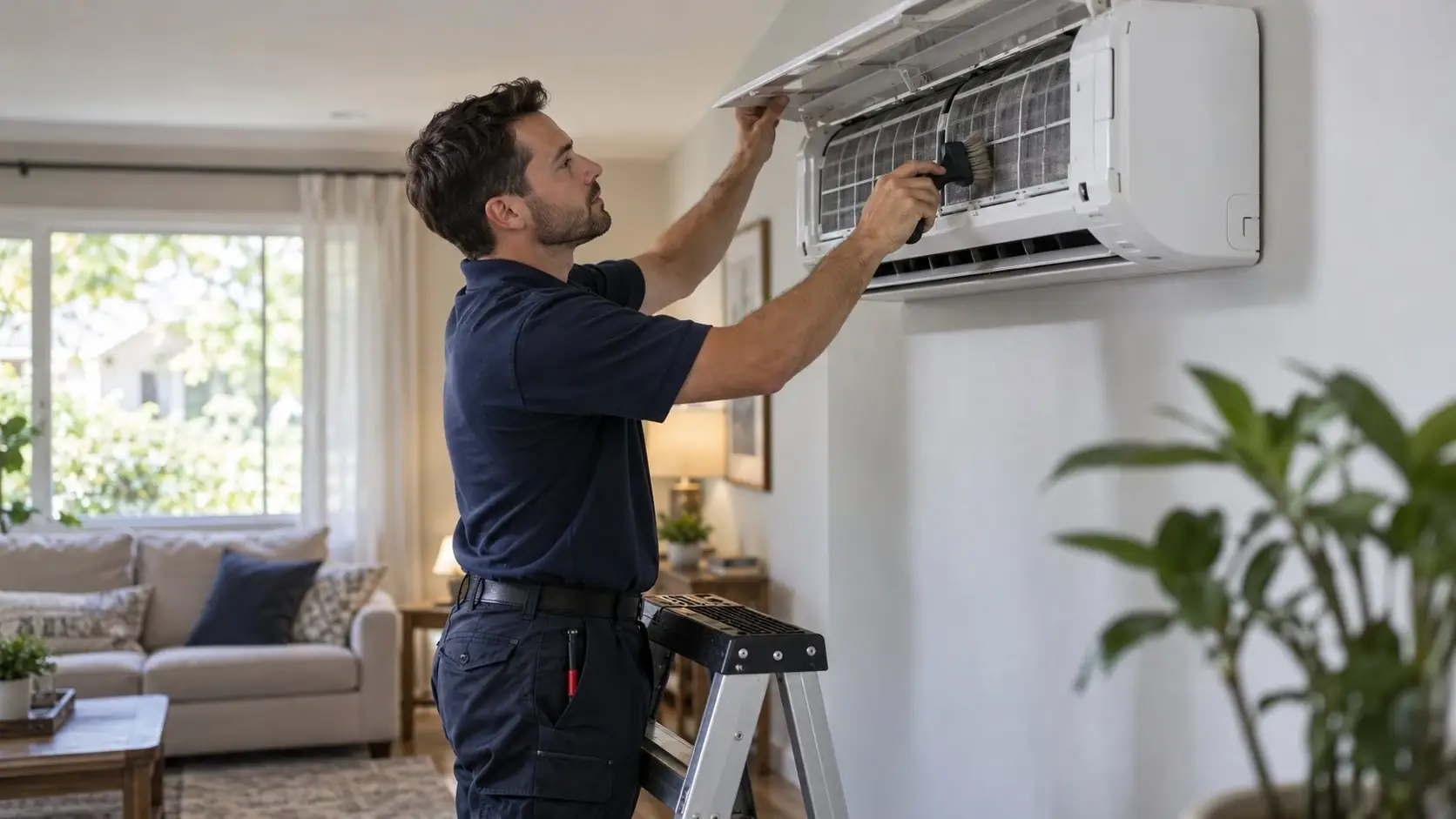
| When | What to do |
|---|---|
| March to April | Cooling tune-up before the heat, rinse the condenser coil, check the drain, test the capacitor |
| May to September | Check the filter monthly, keep two feet of clearance around the outdoor unit, watch for ice or water |
| October to November | Heating check: igniter, flame sensor, heat exchanger inspection, test CO alarms |
| December to February | Replace the filter, listen for new noises, check heat pump defrost operation |
Brands We Service
Carrier, Trane, Lennox, Goodman, Rheem, Heil, Bryant, American Standard, York, Amana, Daikin and Mitsubishi. Not on the list? Call and ask.
FAQ
HVAC Repair St. George: Frequently Asked Questions
Why is my AC running but not cooling?
The most common causes are a clogged filter, a dirty outdoor coil, low refrigerant from a leak or a failed capacitor or fan motor. Replace the filter first. If it still isn’t cooling, shut it off and call, because running a system that is low on refrigerant can damage the compressor.
How quickly can you get to me?
Call (435) 210-9732 and tell us the symptom. We give you the arrival window on the phone before we dispatch.
Is HVAC repair a rip-off?
You approve each line item with us before work starts.
Should I repair or replace my AC?
Look at age, repair cost and repeat failures together. The $5,000 rule multiplies age by repair cost, and over $5,000 favors replacement. The 50% rule says replace when repair is half the price of new.
What is the $5,000 rule for HVAC?
Multiply the system’s age by the repair cost. If the result exceeds $5,000, replacement is usually the better value. It’s a rule of thumb, not a law, so we also consider refrigerant type and repair history.
How long does an AC last in St. George?
Typically 10 to 15 years. Long cooling seasons and dust push systems toward the short end, and regular maintenance helps them reach the long end.
How often should I service my HVAC system?
Once a year for cooling before summer, and once a year for heating before winter, or a single combined visit if you have a heat pump. Filters need checking monthly in cooling season.
Is a new HVAC system tax deductible in 2026?
The federal 25C credit ended on December 31, 2025, so systems installed in 2026 don’t qualify. It was a credit, not a deduction. Ask your utility about current programs and check with a tax professional.
Can I fix my HVAC myself?
You can change filters, clear debris around the outdoor unit, check the thermostat and breaker and clear a visible drain clog. Leave refrigerant, capacitors, gas valves and wiring to a qualified technician.
Do you repair heat pumps and mini-splits?
Yes. Heat pumps and ductless mini-splits are covered on our repair pages.
What brands of AC should I avoid?
Installation quality and maintenance affect reliability more than the nameplate. Ask about parts availability in Southern Utah, whether the installer registers your equipment.
Do you serve Hurricane, Washington and Ivins?
Yes. See the service area table above. For other areas, call and we’ll tell you.
Visit us
Find HVAC Repair St George in St. George, UT
Our location
3830 1500 E Cir, STE 211, St. George, UT
Phone: (435) 210-9732
Most of our work happens at your home, so you do not need to come to us. Call first if you plan to stop by the office.
Ready for HVAC Repair St. George?
Call (435) 210-9732. Tell us the symptom, your address and the make of your system if you know it. We’ll give you the arrival window before we dispatch.
Sources: KUER, This Old House, Honkamp, ZIP Data and Maps.