
St. George, UT · HVAC repair
AC Not Cooling St. George? Check These Causes in Order
If your AC is not cooling, the cause is usually one of a handful of things, and a few take two minutes to check. This page walks through them in the order a technician would, with notes on what is different in St. George, where a system can be working properly and still struggle on a 108°F afternoon.
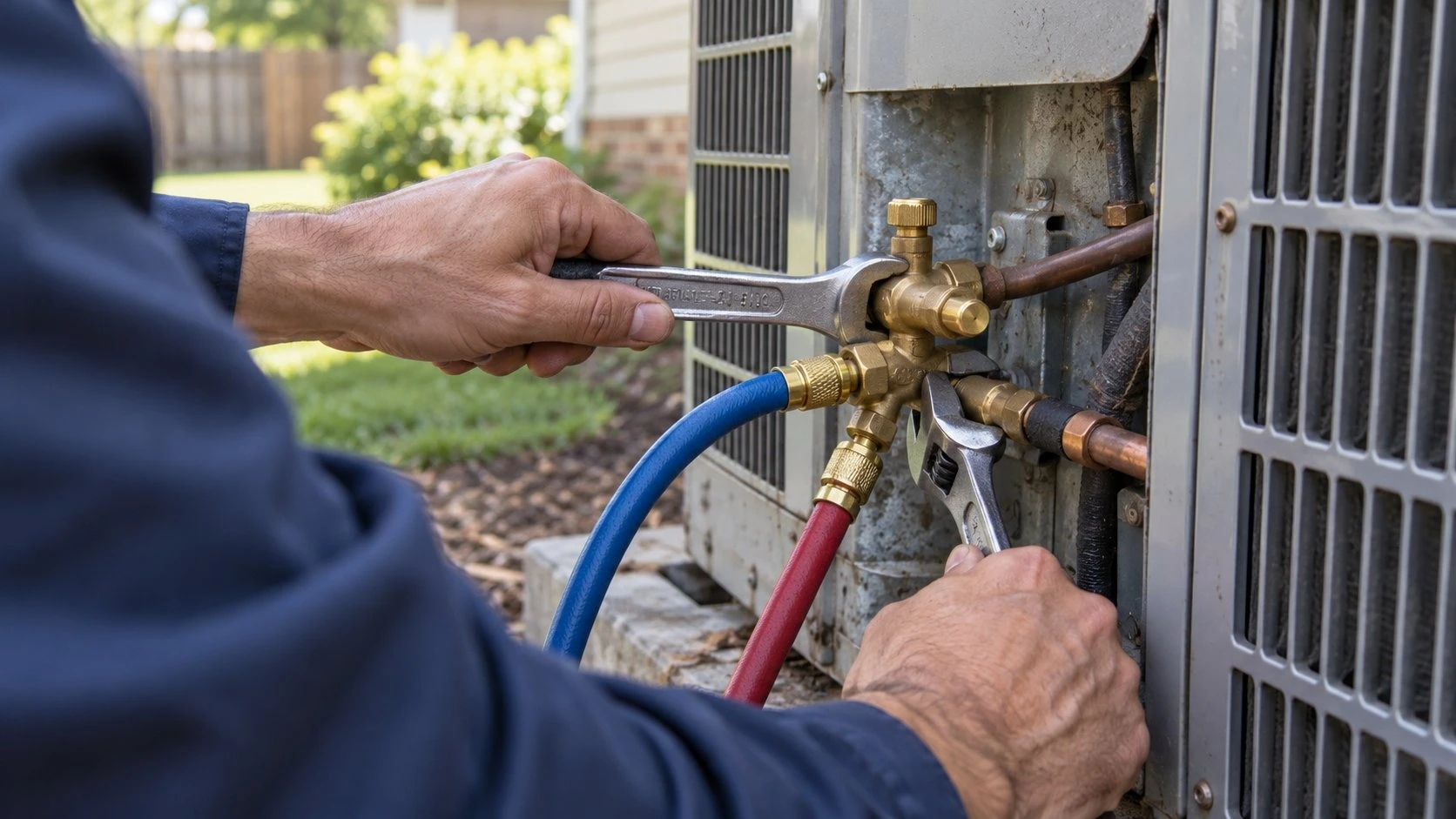
Is It Broken or Just Overwhelmed?
On the hottest days, an air conditioner has a limit. A common rule of thumb is that a correctly sized system holds the house roughly 20 degrees below the outdoor temperature, so a 108°F afternoon may only get you to the high 80s. If the house is holding steady and cooler in the evening, the system is working hard, not failing. If the house keeps climbing, or the air from the vents is barely cooler than the room, keep reading. Both can be true at once: a dirty system loses much of its margin.
Step-by-Step Checks for AC Not Cooling St. George
- Thermostat. Set to Cool, at least 3 degrees below room temperature. Replace batteries if the display is dim.
- Filter. Hold it up to light. If you can’t see through it, replace it. In our dust, check monthly in cooling season.
- Vents and returns. Make sure furniture and rugs aren’t blocking them.
- Outdoor unit. Is the fan spinning? Is the coil covered in leaves, weeds or dust? Is there ice on the copper line? Turn off the power at the outdoor disconnect before touching or rinsing anything.
- Indoor coil and drain. Ice on the coil or line, or water around the unit, means switch to Off and run only the fan.
- Breaker. If tripped, reset it once. If it trips again, stop.
- Rough temperature check. A healthy system usually produces air roughly 15 to 20 degrees cooler at the vent than the air returning to the unit. A much smaller difference points to a refrigerant or airflow problem. It is a rough guide, not a diagnosis.
AC Not Cooling St. George: Likely Causes, Ranked for a Home
| Cause | Why it is common here | Who fixes it |
|---|---|---|
| Dirty filter | Dust loads filters quickly | You |
| Dirty condenser coil | Red dust and desert debris | You (gentle rinse) or a technician |
| Failed capacitor | Heat and long runtimes weaken them | Technician |
| Condenser fan motor | Continuous summer operation | Technician |
| Low refrigerant (leak) | Joints and coils wear over time | Technician |
| Frozen evaporator coil | Restricted airflow or low charge | Technician |
| Clogged condensate drain | Algae in warm, humid months | You or a technician |
| Duct leaks or disconnected ducts | Hot attics, older installs | Technician |
| Undersized or aging system | Many homes are 25+ years old | Evaluation |
When to Call About AC Not Cooling St. George
If your AC is not cooling and the outdoor fan is not spinning, the unit hums but doesn’t start, you see ice on the lines, the breaker trips repeatedly or the system has been on for hours and the house keeps heating up. If a vulnerable person is in the house, treat it as an emergency: Emergency HVAC repair.
What Different Symptoms Usually Mean
| What you see | What it usually means |
|---|---|
| Outdoor fan running, air from vents warm | Compressor not running (capacitor, contactor) or a refrigerant problem |
| Outdoor unit silent and still | Tripped breaker, tripped safety switch, float switch, thermostat or control fault |
| Air from vents cool but weak | Airflow problem: filter, blower, ducts |
| Ice on the indoor coil | Restricted airflow or low refrigerant |
| Cools in the morning, fails in the afternoon | System at capacity, dirty coil, weak capacitor or undersized for the load |
| Cools some rooms but not others | Duct leaks, closed or blocked vents, or a zoning problem |
| House feels sticky, not just warm | Humidity, often from short cycling or an oversized system |
What a Technician Measures When AC Is Not Cooling St. George
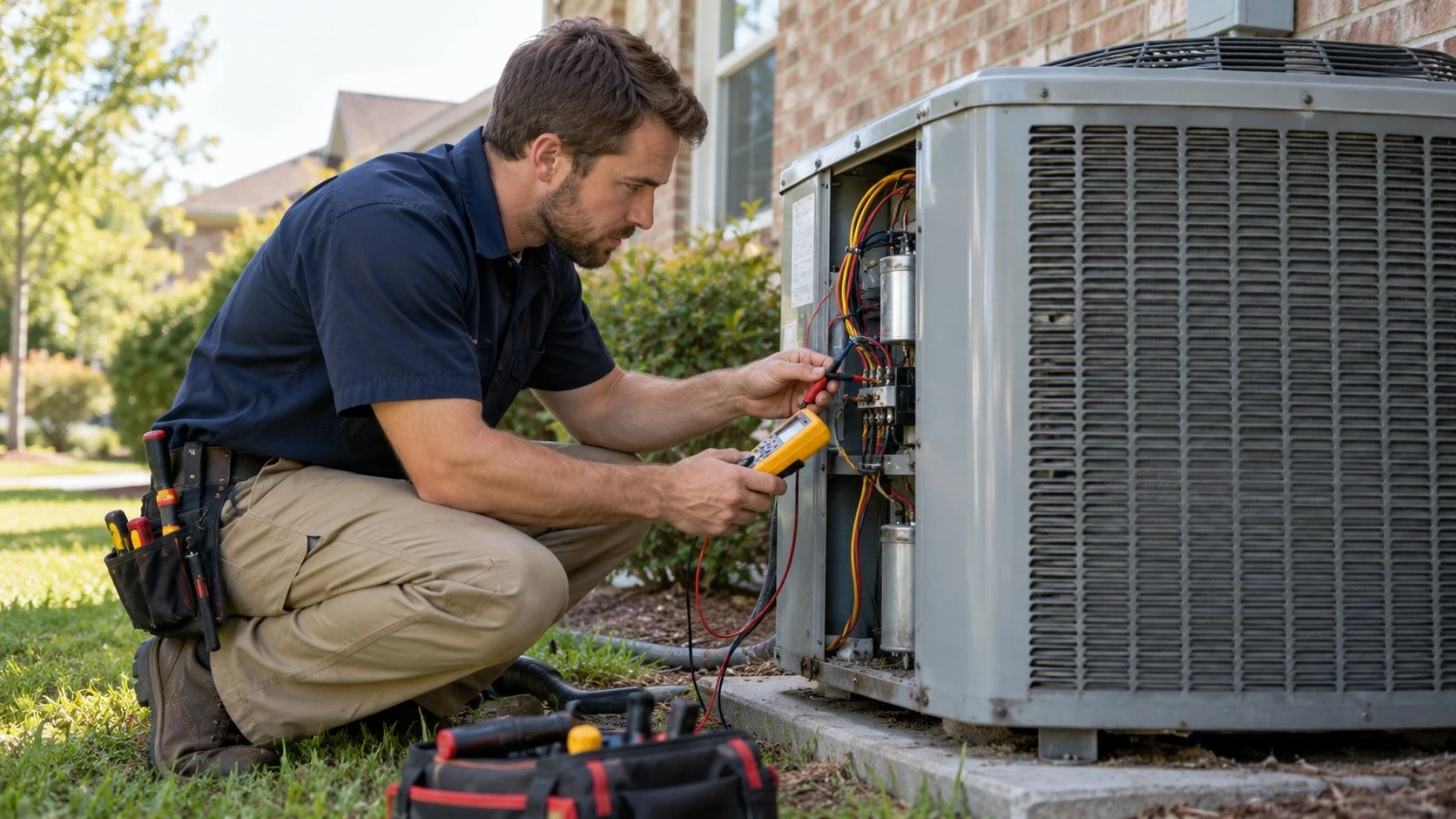
We check the temperature drop across the indoor coil, suction and discharge pressures, superheat and subcooling, amp draw on the compressor and fan motors, capacitor values and airflow. Those numbers separate a dirty coil from a refrigerant leak from a failing motor, which look the same from your living room.
Why Filters Mislead When Your AC Is Not Cooling
A filter can look fine and still restrict airflow if it has a high MERV rating that the system wasn’t designed for. A very dense filter in a system built for a lighter one can cut airflow. Ask a technician what filter your system is built for.
When the Problem Is the House, Not the AC
Homes built in the 1990s and 2000s may have attic ducts with leaks, thin insulation or undersized returns. Windows facing west bake in the afternoon. A repair can bring the AC back to its rated performance, but it can’t change the house. If the system tests healthy and the house still can’t keep up, a duct and load evaluation is the next step. See Duct repair and sealing.
Refrigerant work is regulated: the EPA’s Section 608 program sets the rules for technicians who handle it.
Related Questions About AC Not Cooling St. George
My AC is fine but the house isn’t cooling. Why?
The system may be working to spec while the house gains heat faster than it can remove. Shade, attic insulation and duct sealing change that.
Why does my AC cool at night but not in the afternoon?
At peak outdoor temperatures the system is at its limit, and any weakness shows.
Should I turn off the AC and let it rest?
No. Letting a house heat soak means a long, hard cooldown. Raise the setpoint a few degrees instead.
Questions About AC Not Cooling St. George
Why is my AC running but not cooling?
Dirty filter or coil, low refrigerant, or a failed fan motor or capacitor are the usual causes.
Why is my AC blowing warm air?
If the outdoor fan isn’t running, the compressor can’t shed heat and the air stays warm. It can also be a refrigerant leak or a tripped safety switch.
Why did my AC freeze up?
Low airflow from a dirty filter or a refrigerant leak. Turn it off, run the fan to melt the ice and call.
How long should an AC run in July?
Long cycles are normal in extreme heat. Continuous running with no temperature progress is not.
Can I add refrigerant myself?
No. It requires EPA certification, and low refrigerant means a leak that must be found first.
Need HVAC repair in St. George?
Call (520) 123-4567 or request service online. You hear the arrival window before we dispatch.